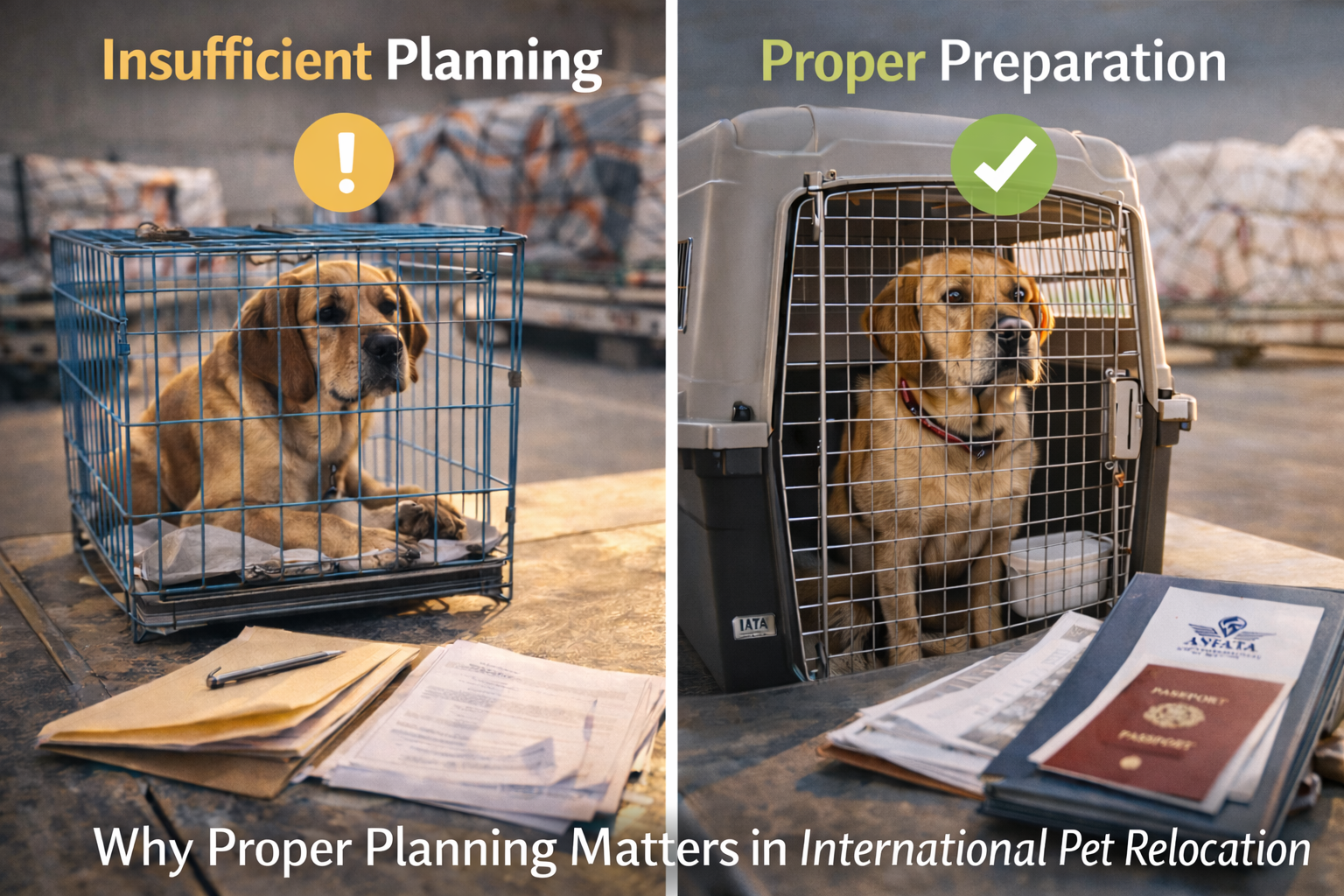
Why Proper Planning Matters in International Pet Relocation
When relocating a pet internationally, two journeys may look similar on the surface — but the level of preparation behind them can completely change the outcome.
International pet transport is not simply about booking a flight. It is a regulated logistical process that involves veterinary compliance, airline policies, crate standards, seasonal restrictions, and destination import requirements. Small oversights can lead to delays, refusals, additional costs, or unnecessary stress for families.
Proper planning is not optional — it is essential.
The Hidden Complexity of Moving a Pet Abroad
Many pet owners are surprised to learn how detailed international relocation truly is. Each country has its own regulations, and airlines apply their own policies on top of those.
A successful pet relocation typically involves:
Accurate veterinary documentation
Microchip verification
Vaccination timing compliance
Import permits (where required)
Airline-approved route selection
IATA-compliant crate sizing
Seasonal embargo considerations
Coordination between shipper, airline, and destination agent
Missing or mismanaging even one element can result in denied boarding or entry delays at destination.
Crate Compliance: More Than Just a Box
One of the most common issues in pet travel is incorrect crate sizing.
An IATA-compliant crate must allow the pet to:
Stand without ears touching the top
Turn around comfortably
Lie down naturally
Have adequate ventilation on multiple sides
Using the wrong crate may result in airline refusal at check-in — often at the last minute. Proper measurement and equipment selection are critical for safety and acceptance.
Documentation Accuracy Is Critical
International pet travel documents are time-sensitive and must align with specific country requirements. Errors such as:
Incorrect vaccination dates
Incomplete health certificates
Missing endorsements
Incorrect microchip details
can delay travel or cause complications upon arrival.
Preparation includes not only obtaining documents, but verifying them against current regulations and airline requirements.
Route Planning & Seasonal Considerations
Not all routes are equal when transporting pets.
Factors that must be considered include:
Layover duration
Airport handling capabilities
Temperature restrictions
Breed-specific airline policies
Seasonal embargoes
For example, many airlines restrict brachycephalic breeds or impose summer heat embargoes. Proper route analysis reduces risk and avoids preventable disruptions.
The Cost of Insufficient Planning
When planning is rushed or incomplete, families may experience:
Flight refusals at check-in
Additional kennel purchases
Rescheduling fees
Extended boarding costs
Import delays at destination
The financial impact is one factor — but the emotional stress is often greater.
For families, pets are not cargo. They are part of the relocation.
Professional Preparation Makes the Difference
International pet relocation requires coordination, regulatory knowledge, and risk management.
Proper preparation includes:
Reviewing country import rules in detail
Ensuring documentation accuracy
Selecting airline-compliant equipment
Coordinating schedules with veterinary timelines
Monitoring seasonal and route-specific restrictions
The difference between a stressful relocation and a smooth one often lies in preparation.
Final Thoughts
International pet transport is a structured, regulated process. While millions of pets travel safely each year, the safety of that journey depends on compliance, coordination, and careful planning.
The goal is not simply to move a pet from one country to another — it is to ensure a safe, smooth, and fully compliant relocation from start to finish.
Because pets are family — and preparation matters.