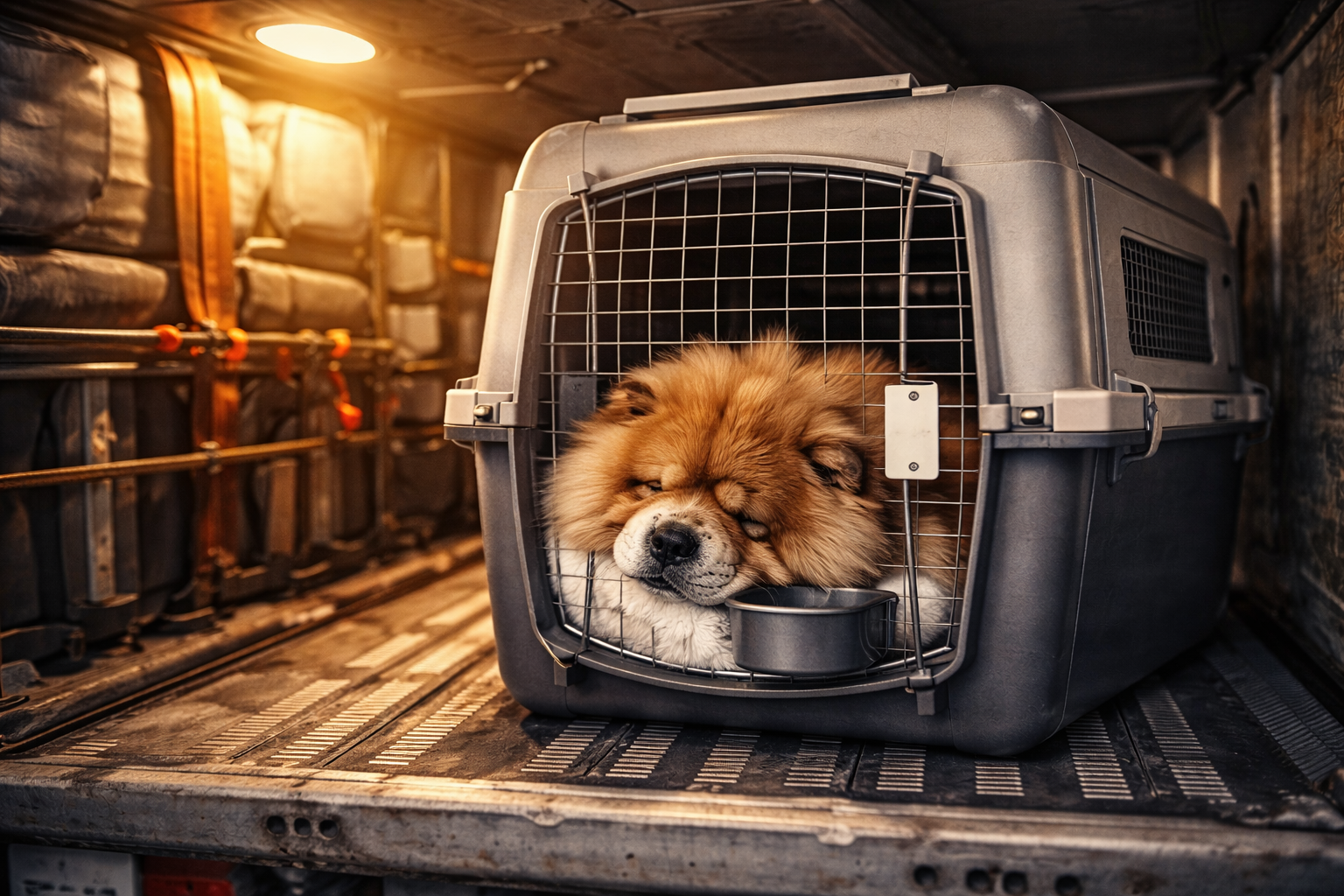
Why Some Dogs Cannot Fly in the Cabin or as Excess Baggage
Several factors can prevent a dog from traveling under standard airline pet travel options.
1. Size and Weight Restrictions
Most airlines impose strict limits for pets traveling in the cabin.
Because the carrier must fit under the seat, larger dogs cannot be accommodated in the passenger cabin.
Similarly, excess baggage programs may have crate size or weight restrictions, depending on the aircraft.
2. Brachycephalic (Short-Nosed) Breed Restrictions
One of the most important airline restrictions involves brachycephalic dog breeds, also known as short-nosed breeds.
Examples include:
Bulldogs
Pugs
Shih Tzus
Boxers
Boston Terriers
French Bulldogs
These breeds have shorter airways and can be more sensitive to stress, temperature changes, and reduced oxygen levels during flights.
Because of the increased risk of respiratory complications, many airlines restrict brachycephalic dogs from traveling as excess baggage.
3. Aircraft Limitations
Not all aircraft are suitable for transporting animals.
Some aircraft types do not have temperature-controlled cargo compartments, which makes them unsuitable for live animal transport.
Airlines must therefore confirm that the specific aircraft assigned to the flight can safely accommodate pets.
This is why airline approval is sometimes only confirmed close to the departure date.
4. Weather and Temperature Restrictions
Airlines prioritize animal safety and may restrict pet travel during extreme temperatures.
If temperatures are too hot or too cold at the origin, destination, or transit airport, airlines may apply seasonal pet travel embargoes.
These restrictions are designed to prevent animals from being exposed to unsafe conditions during ground handling.
Why Manifested Cargo Is Often the Safest Option
Although many owners initially prefer cabin or excess baggage travel, manifested cargo transport is often the safest and most reliable option for international pet relocation.
Key advantages include:
Transport in IATA-approved travel crates
Supervision by trained airline cargo teams
Flights selected based on animal safety requirements
Greater flexibility for long-distance or international routes
This method is widely used for relocating pets between continents and ensures compliance with airline and government regulations.
Planning Pet Travel in Advance
International pet relocation requires careful preparation.
Pet owners should begin planning early to allow enough time for:
Veterinary procedures and health certificates
Import permits and destination requirements
Travel crate preparation and training
Airline booking and route planning
Early planning significantly reduces the risk of travel delays.
Professional Pet Relocation Assistance
Every pet relocation case is unique. Breed, size, destination country regulations, airline policies, and travel timing all influence the available travel options.
Working with an experienced pet relocation company can simplify the process and ensure compliance with international regulations.
At Fly Your Tail, we help pet owners coordinate every step of their pet’s journey, from documentation and veterinary preparation to airline booking and safe travel arrangements.
If you are planning an international move with your pet and need guidance on the best travel option, professional support can make the process significantly easier.
📩 julia@flyyourtail.com
🌐 www.flyyourtail.com