How to Choose an IATA-Compliant Kennel for Your Pet’s International Travel
When pets travel by air, their kennel becomes their safe space for the entire journey. Choosing the correct crate is not just about comfort — it is also a strict requirement for airlines and international animal transport regulations.
Airlines follow the International Air Transport Association (IATA) Live Animals Regulations, which define the standards for pet travel containers. If a crate does not meet these requirements, the airline may refuse your pet at check-in.
Understanding how to select the right kennel is therefore one of the most important steps when preparing your pet for international relocation.
What Does “IATA-Compliant” Mean?
An IATA-compliant kennel is a travel crate designed to meet specific safety and welfare standards for animals transported by air.
These standards ensure that the pet:
Has enough space to stand and turn around comfortably
Has proper ventilation during the journey
Remains safe and secure inside the container
Can be handled safely by airline staff
Airlines enforce these rules to ensure that animals travel safely and humanely.
Size Is the Most Important Factor
One of the most common mistakes pet owners make is choosing a kennel that is too small.
According to IATA guidelines, the crate must allow the pet to:
Stand naturally without touching the top
Turn around comfortably
Lie down in a natural position
If the kennel is too small, the airline may deny transport at check-in.
How to Measure Your Pet
To calculate the correct crate size, measure:
A – Length: Nose to base of tail
B – Height: Floor to top of head or ears (whichever is higher)
C – Width: Across the shoulders
These measurements determine the minimum kennel dimensions required.
Because each pet is different, it is always recommended to confirm sizing with a professional before purchasing a crate.
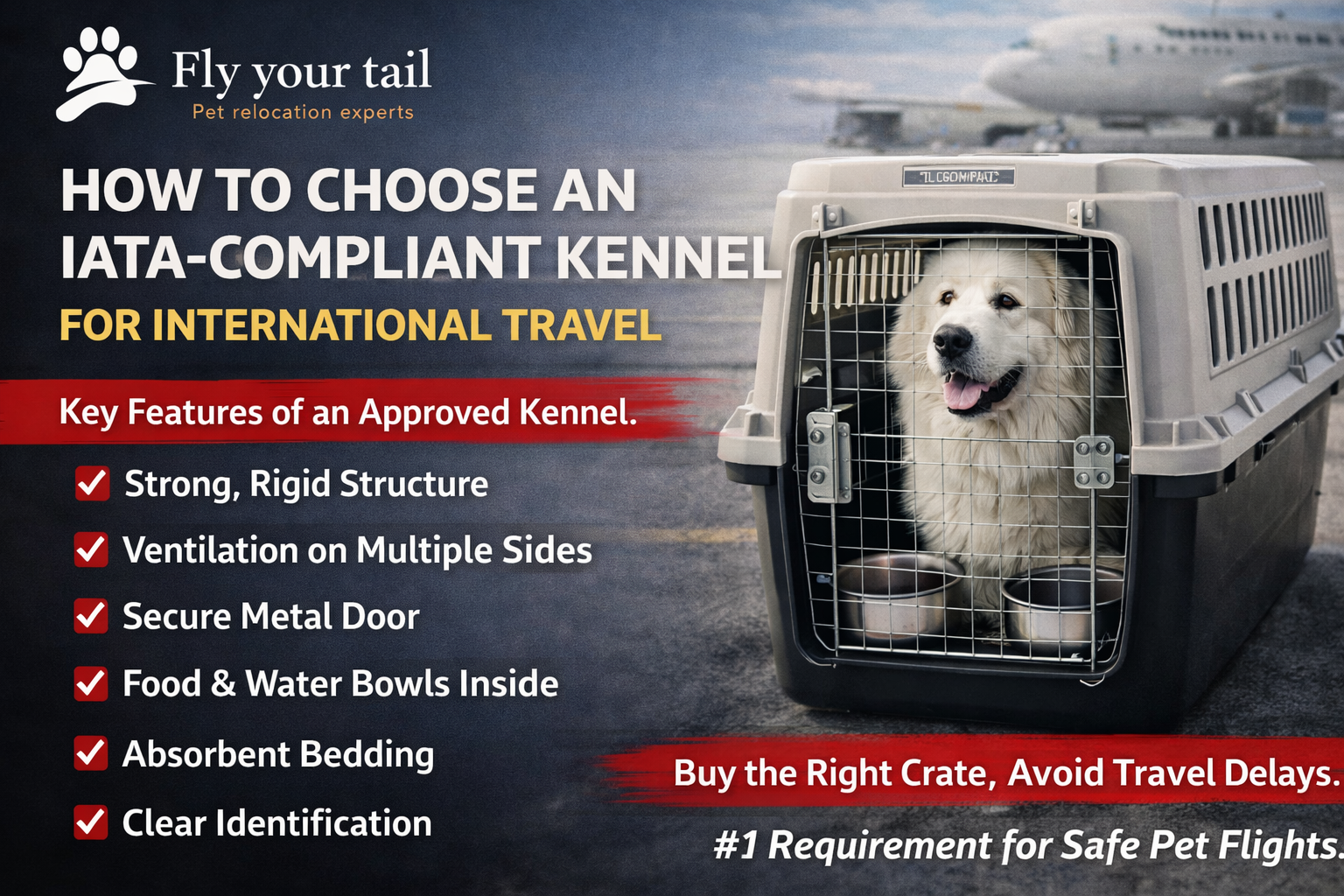
Required Features of an IATA Travel Kennel
An approved pet travel crate must include several specific features.
1. Strong, Rigid Structure
The kennel should be made of durable plastic or fiberglass. Soft carriers are usually only allowed for pets traveling in the cabin, not as cargo or excess baggage.
The structure must be solid enough to protect the animal during handling and transport.
2. Ventilation on Multiple Sides
The crate must have adequate ventilation openings on at least three sides (and four sides for international travel in many cases).
Proper airflow helps maintain a safe temperature and reduces stress for the animal.
3. Secure Metal Door
The door must be made of metal mesh, not plastic. It must close securely and be lockable to prevent accidental opening during transport.
Airlines often require metal bolts rather than plastic clips to hold the kennel together.
4. Food and Water Containers
The kennel must include two bowls, typically attached to the inside of the door.
These allow airline staff to refill water during long journeys without opening the crate.
5. Absorbent Bedding
The crate should contain absorbent material, such as:
Puppy pads
Vet bedding
Towels or blankets
Loose materials like straw or hay are usually not allowed.
6. Clear Identification
A compliant kennel should display:
“Live Animals” stickers
Directional arrows indicating upright position
Pet identification labels with owner contact details
These labels help airport staff handle the crate properly during transit.
Why Proper Crate Preparation Matters
A travel kennel is not just a container — it becomes the pet’s temporary home during the journey.
Choosing the correct kennel ensures:
Your pet travels safely
Airline requirements are met
The risk of travel delays is reduced
Your pet experiences less stress during the flight
For international travel, airlines and cargo terminals carefully inspect kennels before accepting the animal.
Start Crate Training Early
Even the best kennel will not help if your pet is not comfortable inside it.
Crate training should ideally begin several weeks before travel so that the pet learns to associate the crate with safety and rest.
Simple training tips include:
Leaving the crate open at home
Placing toys or treats inside
Allowing the pet to rest inside voluntarily
Gradually increasing the time spent in the crate
A well-trained pet will feel much calmer during travel.
When in Doubt, Ask a Professional
Choosing the correct kennel can be confusing, especially for first-time pet relocations.
Airline requirements, breed considerations, and destination country rules can all influence the correct crate selection.
If you are planning an international move and want to make sure your pet’s kennel meets all requirements, professional guidance can help prevent costly mistakes.
Final Thoughts
An IATA-compliant kennel is one of the most important elements of safe pet travel.
The correct crate ensures that pets are transported comfortably, securely, and according to international standards.
With proper preparation, the journey can be smooth for both pets and their owners.
Because when pets travel, their safety and comfort always come first.