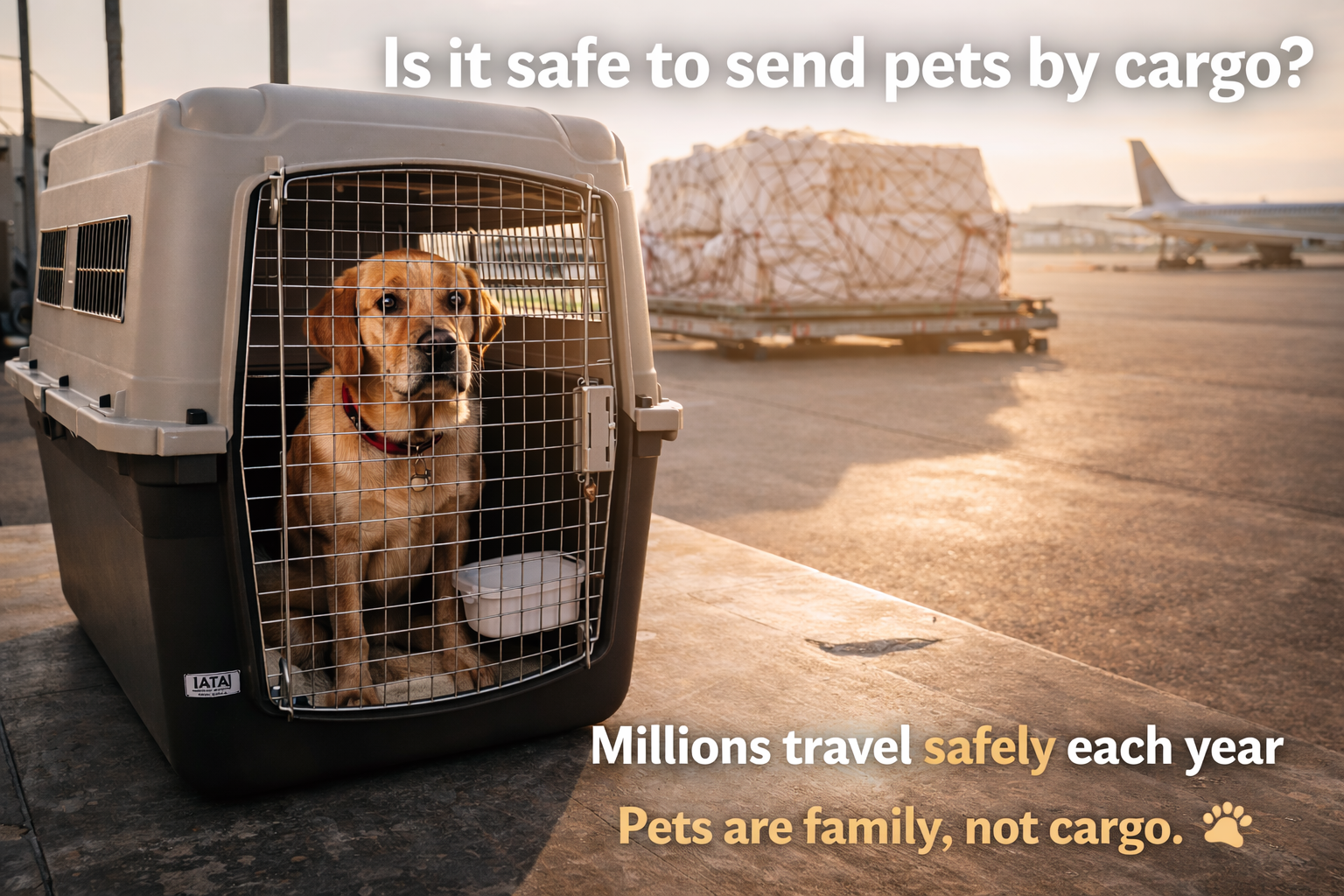
Is It Safe to Send a Pet by Cargo? Risks, Statistics & What Every Owner Should Know
Relocating with a pet can be emotional — and one of the most common questions we hear is:
“Is it safe to send my pet as air cargo?”
The short answer:
Yes, air cargo pet travel is generally safe.
But like any form of transportation, there are risks — and understanding them helps you make informed, confident decisions.
In this guide, we break down the real statistics, common risks, breed considerations, and how to reduce potential problems when shipping a pet internationally.
What Do the Numbers Say About Pet Cargo Safety?
Millions of animals travel by air every year worldwide.
In the United States, airlines are required to report animal transport incidents. Recent publicly available data shows:
Over 188,000 animals transported in one year
Fewer than 10 reported incidents
Incident rates typically below 1 per 10,000 transported animals
This means the statistical risk of a serious incident (death, injury, or loss) is extremely low — well under 0.01%.
While no transport method is completely risk-free, the overwhelming majority of pets arrive safely at their destination.
What Are the Real Risks of Shipping a Pet by Cargo?
Although rare, risks can include:
Health complications
Pre-existing respiratory or cardiac conditions
Undiagnosed illness
Stress response in vulnerable pets
Temperature exposure
Modern aircraft cargo holds for live animals are:
Pressurized
Temperature controlled
However, risks may arise during:
Ground handling
Extreme weather conditions
Delays on the tarmac
Breed-specific risks
Brachycephalic (flat-faced) breeds — such as:
French Bulldogs
Bulldogs
Pugs
Persian cats
are more prone to respiratory distress. Many airlines restrict or prohibit these breeds in cargo for safety reasons.
Crate-related issues
Improper crate size or non-IATA compliant kennels can increase risk. The crate must:
Allow full standing without ear contact
Allow full turning
Provide adequate ventilation on 3–4 sides
Is Air Cargo Different From “Excess Baggage”?
Yes — and this is important.
Manifested cargo:
Handled by cargo specialists
Monitored separately from passenger baggage
Has stricter documentation and tracking processes
Often considered safer for long-haul international travel
For complex relocations, manifested cargo is typically the most secure and compliant option.
Why Do Millions of Pets Travel Safely Every Year?
Because modern pet air transport includes:
Pressurized and temperature-controlled compartments
Trained ground staff
International live animal regulations (IATA LAR)
Veterinary clearance requirements
Breed and seasonal restrictions
When handled properly, cargo travel is a structured and regulated process — not random luggage handling.
How to Minimize Risk When Shipping a Pet
If you are considering air cargo for your pet, here’s how to significantly reduce risk:
Use an experienced pet relocation specialist
International documentation errors are one of the most common causes of travel disruption.
Choose airline-approved routes
Avoid unnecessary layovers when possible.
Use a correctly sized, IATA-approved crate
This is critical for safety and airline acceptance.
Schedule flights during mild weather
Avoid peak summer heat or extreme cold.
Ensure full veterinary evaluation
Your vet should confirm your pet is fit to fly.
The Emotional Side: Why the Fear Feels Bigger Than the Risk
Sending a pet as cargo sounds frightening because:
You can’t see them during the flight
The word “cargo” feels impersonal
Pets are family
But in reality, for long-distance international relocation, cargo is often the safest and only legally compliant option.
The fear is emotional — the data shows the statistical risk is very low.
Final Verdict: Is Pet Cargo Safe?
Yes — when done correctly.
The risk of serious incidents is statistically very small, especially when:
The pet is healthy
The crate is compliant
The airline route is appropriate
The process is professionally managed
The key difference between a stressful experience and a smooth relocation is proper planning.
Planning an International Pet Move?
At Fly Your Tail, we manage every step of international pet relocation — from documentation and airline coordination to arrival support — with safety, compliance, and care at the center of every journey.
Because pets are family, not cargo.
If you’re preparing for an international move and want guidance, contact us for a consultation.