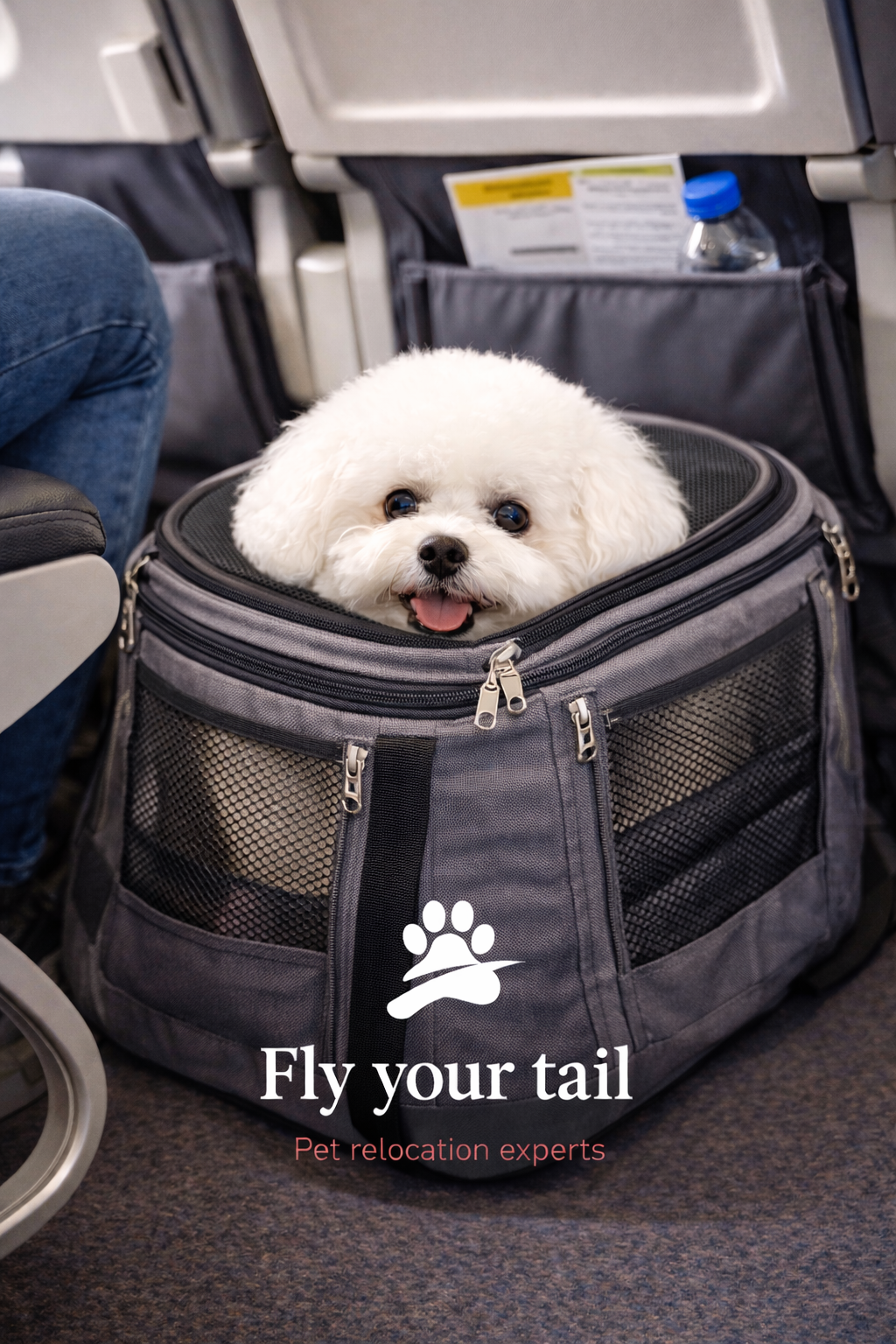
Flying With Your Pet In Cabin: What You Really Need to Know Before Booking
For many families, flying with their pet in cabin feels like the safest and most comforting option. Your pet is close to you, you can see them during the flight, and it seems simpler than cargo travel.
But once you start researching airline policies, things quickly become confusing.
Every airline has different rules. Different aircraft types. Different carrier size limits. Different weight restrictions. Different documentation requirements.
And one small mistake can mean denied boarding at the airport.
As a pet relocation specialist, I can tell you that flying in cabin is possible in many cases — but it requires planning and strategy.
Let’s break it down properly.
1. Not All Airlines Allow Pets In Cabin
Even if an airline “allows pets,” that doesn’t mean:
It’s allowed on every route
It’s allowed on long-haul flights
It’s allowed in Business class
It’s allowed on specific aircraft types
Some airlines restrict pets in cabin on transatlantic or long-haul routes. Others limit the number of pets per flight. Some require advance approval before issuing tickets.
You cannot assume availability — it must be confirmed before booking.
2. Carrier Size Is Strict (And Non-Negotiable)
Airlines require pets to fit fully inside an approved soft carrier that:
Fits under the seat
Allows the pet to stand and turn around
Stays closed during the entire flight
Many owners underestimate this requirement.
For example:
A 7 kg dog may technically be under the weight limit
But if the dog is tall or long, it may not fit comfortably in the maximum allowed carrier dimensions
At the airport, staff may ask to see the pet inside the carrier. If the fit is not adequate, boarding can be refused.
3. Weight Limits Include The Carrier
Most airlines set limits between 7–10 kg total weight (pet + carrier).
That means:
If your pet weighs 8 kg and the carrier weighs 1.5 kg, you may already exceed the limit.
And airlines do weigh carriers.
4. Documentation Is Still Required
Even for in-cabin travel, international relocations require proper documentation, such as:
Microchip (ISO compliant)
Valid rabies vaccination
Additional vaccines depending on destination
Health certificate issued within the required time window
Government endorsement (for some countries)
Each country has specific timelines. Some require treatments within 24–120 hours before travel.
Missing one step can delay your trip.
5. Stress Preparation Matters
Flying in cabin is not automatically stress-free.
Your pet must:
Stay inside the carrier for the full duration
Be comfortable in confined spaces
Tolerate airport noise and movement
Carrier training weeks in advance is essential.
Sedatives are strongly discouraged and often prohibited by airlines.
6. Extra Baggage vs Manifested Cargo — Understanding the Difference
Some families confuse “in cabin” with “extra baggage.”
These are different options:
In cabin: Pet travels under the seat with you.
Extra baggage: Pet travels in the aircraft hold on the same flight as the owner.
Manifested cargo: Pet travels under the airline’s cargo program with specialized live animal handling teams.
In some cases — especially for brachycephalic breeds — manifested cargo may actually be the safest approved method, even if it sounds more complex.
Each case must be evaluated individually.
Why Professional Guidance Helps
When you are relocating internationally, you are already managing:
Visas
Housing
Shipping belongings
Family logistics
Adding airline compliance, veterinary timelines, and carrier measurements can quickly become overwhelming.
This is why we offer a dedicated Pet In-Cabin Consulting Service.
We review your documentation, check airline policies, confirm carrier requirements, guide booking strategy, and design a timeline so nothing is left to chance.
You pay airlines and veterinarians directly — we simply ensure you choose the safest and most suitable option.
Final Thoughts
Flying with your pet in cabin is possible in many cases.
But it is not something to leave to guesswork.
The earlier you start planning, the smoother the journey will be — for both you and your pet.
If you are preparing an international move and would like professional guidance, feel free to get in touch.
Because when they travel with you, every detail matters.
—
Julia
Fly Your Tail
Pet Relocation Experts