Case Study: Relocating Three Pugs From Los Angeles to Hanoi (Kingsley, Toby and Penelope)
Case Study: Relocating Three Pugs From Los Angeles to Hanoi
Relocating pets internationally is rarely straightforward. When multiple pets are involved — especially brachycephalic breeds — the process requires even more planning, coordination, and attention to detail.
This case study outlines the relocation of three pugs from Los Angeles to Hanoi, and highlights what goes on behind the scenes to ensure a safe and compliant journey.
The relocation context
The family was relocating from the United States to Vietnam and needed to move three pugs internationally.
Because pugs are a brachycephalic (short-nosed) breed, their relocation requires additional considerations related to:
Airline restrictions
Seasonal temperatures
Routing options
Animal welfare and safety
The move also involved a long-haul route crossing multiple time zones, making planning and timing especially important.
Key challenges of this relocation
This relocation presented several challenges that needed to be addressed early in the process:
1. Breed-specific considerations
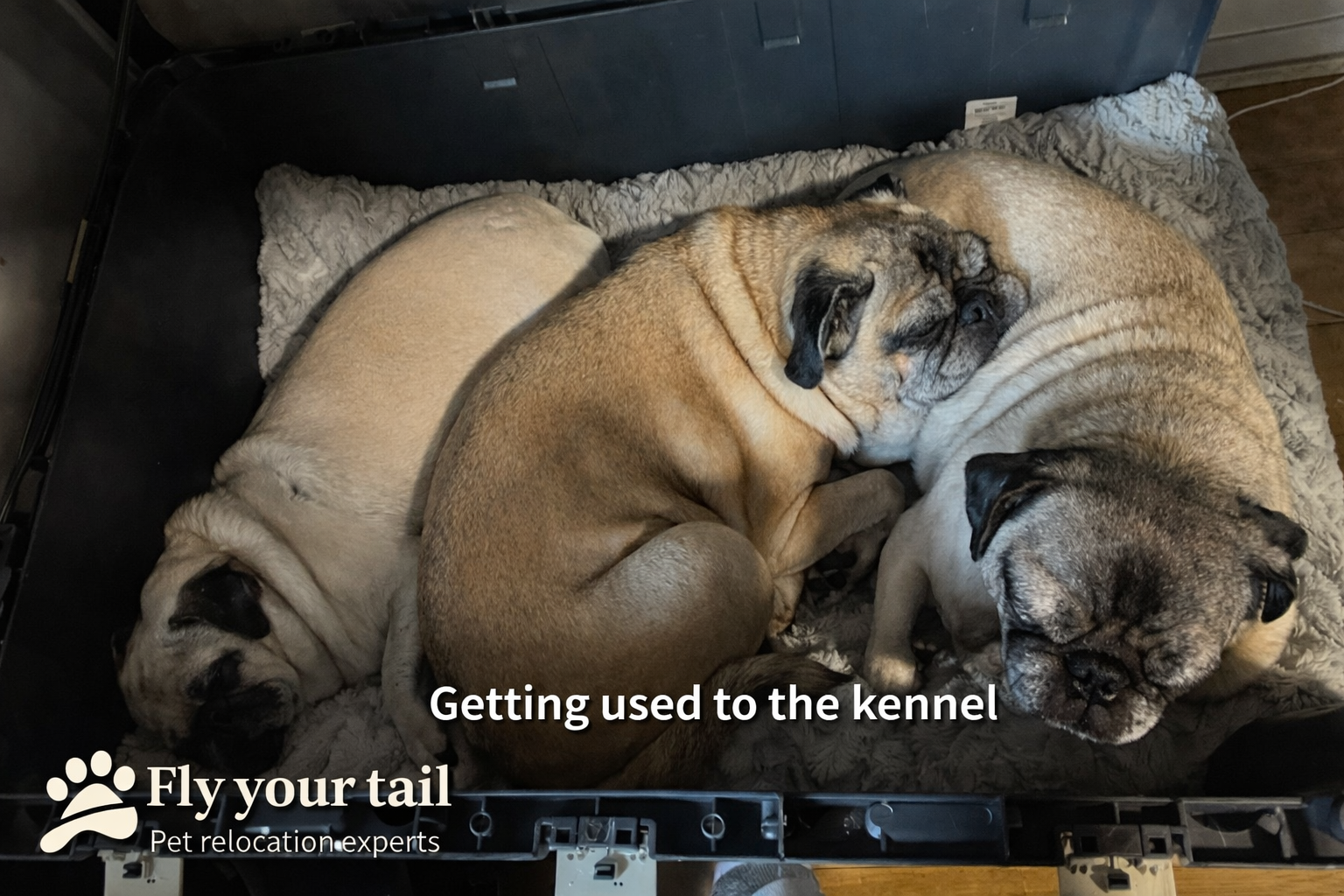
Many airlines impose restrictions on brachycephalic breeds due to their increased sensitivity to stress and temperature changes. Selecting suitable routing and timing was essential.
2. Regulatory requirements
Importing dogs into Vietnam requires compliance with specific veterinary and documentation requirements. All vaccinations, health certificates, and supporting documents needed to be correctly aligned with the travel date.
3. Coordinating three pets
Relocating multiple pets at once increases logistical complexity. Each pet must meet the same regulatory standards while also being assessed individually.
4. Travel-day timing
International pet travel often takes place outside standard office hours. Monitoring the journey and being available during critical moments was an important part of the process.
The planning phase
The relocation began with a detailed assessment of:
The pets’ profiles (breed, age, size)
The destination country’s import regulations
The family’s relocation timeline
Airline and routing options suitable for pugs
A clear and realistic timeline was established, allowing sufficient time to:
Complete veterinary requirements
Prepare documentation
Coordinate with trusted, IPATA-registered logistics partners
Plan travel during suitable conditions
This planning phase is crucial in international pet relocation, particularly for sensitive breeds.
Travel and arrival in Hanoi
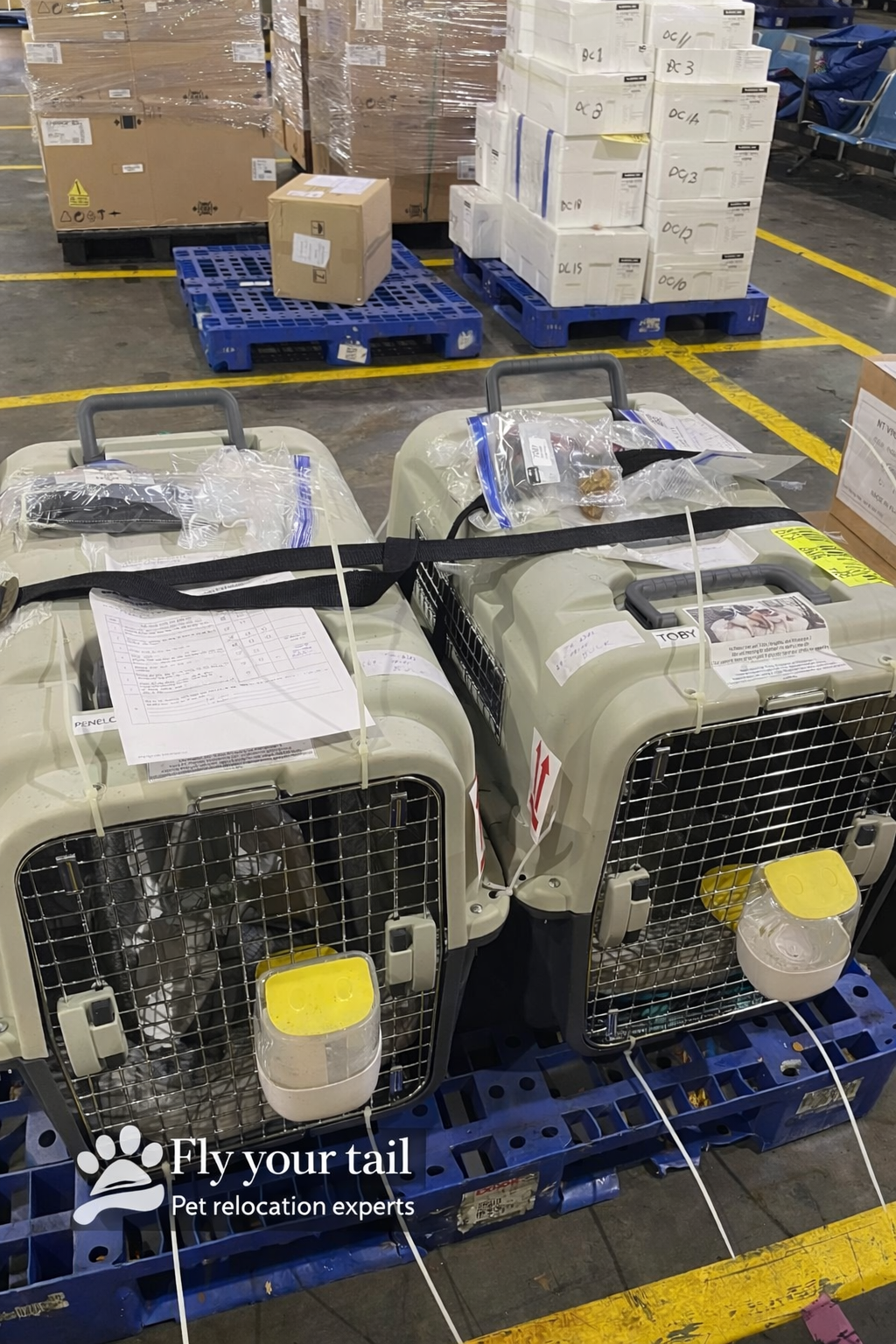
The dogs travelled on a carefully selected route designed to minimise stress and comply with airline and regulatory requirements.
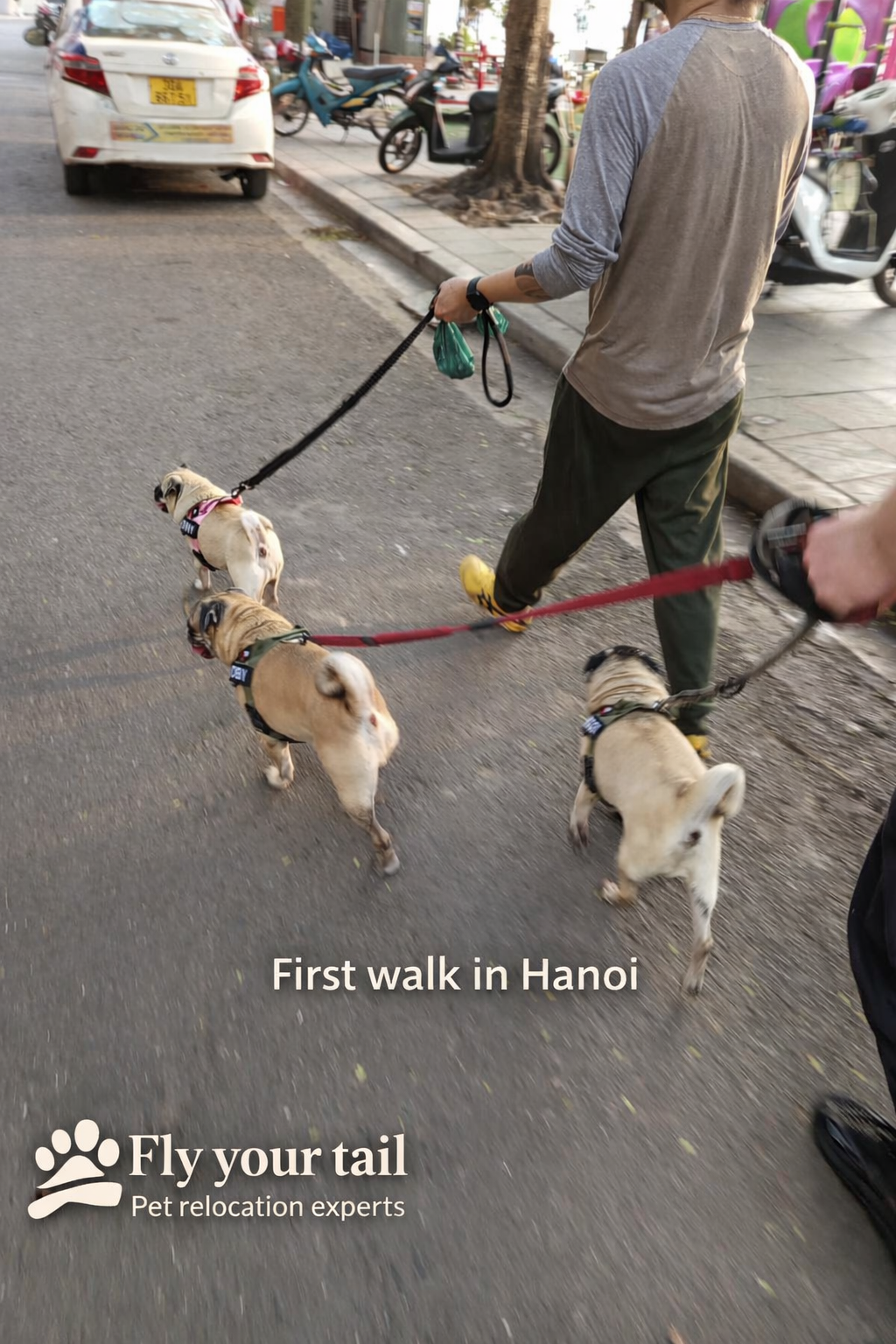
Upon arrival in Hanoi, customs clearance and final checks were completed in coordination with local partners. The dogs arrived tired, but safe and well — the result of weeks of preparation behind the scenes.
Travel days are often the most stressful for pet owners, which is why real-time availability and monitoring are especially important during this phase.
Key takeaways from this case
This relocation highlights several important points about international pet relocation:
Planning must start well before the travel date
Breed-specific considerations can significantly impact travel options
No two relocations are ever the same
Coordination across countries and time zones is essential
Support during travel days matters just as much as preparation
Final thoughts
Relocating three pugs from Los Angeles to Hanoi required careful planning, regulatory compliance, and close coordination at every stage.
This case is a good example of why international pet relocation is more than just booking a flight. Behind every successful arrival, there are weeks — sometimes months — of preparation and decision-making focused on the pet’s safety and wellbeing.
Every pet relocation tells a different story. This is one of them.